Logo

Central Council News
- Details
- Category: Central Council
NFS-Delta Q&A from training seminar
Answers to questions at the Training Session:
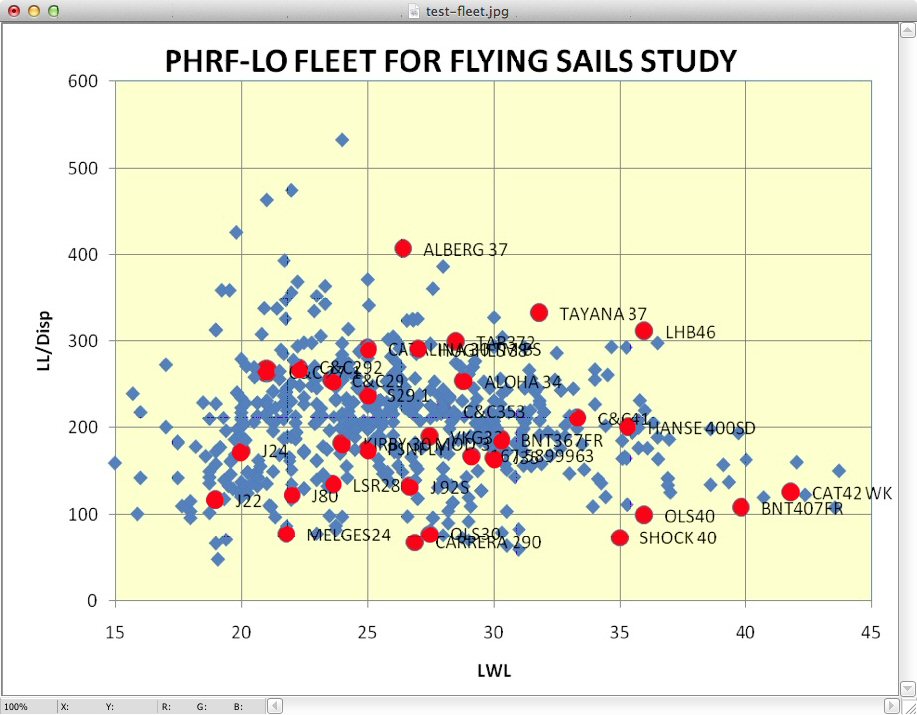
1. A database of Lake Ontario classes was set up choosing boats that spanned the range of classes we have on the lake.
All these classes had been measured for ORR. The primary analysis was done on this database and the ORR VPP was done for each boat class both with and without spinnakers.
The difference in performance being referred to as the NFS-Delta.
The next step was to develop a predictive algorithm that would provide an estimate of those deltas using the existing measurements that we have on all Lake Ontario Classes.
This means that 95% of all the estimate will be within 3 secs per mile.
Sorry for the long answer, the short answer is that we are using the existing measurements in our database.
2. Firstly, PHRF-LO cannot accommodate all the different courses that might be run but it so happens that the course type we have chosen to use in our algorithm is referred to as a general purpose course.
This represents courses which finish were they start and entail reaching as well as windward leeward.
In fact, it could not be better for your type of course. Ultimately, clubs can always make their own handicap adjustments to suit their local situation and conditions.
3. The "Standard Error" or SD of the error I referred to is the error between the VPP observed delta and the delta from the estimating algorithm for the same classes.
You appreciate that we cannot perform an ORR VPP calculation on all our classes but only on our representative database. We then have to estimate the delta based on the dimensional specifications we have.
Your second sentence is correct except that the GPH (General Purpose Handicap) is based on 8 kts.